SEO in 2026: A Beginner's Guide to Modern Search Optimization in the AI Era
目次
Key Takeaways: 5 SEO Essentials Every Beginner Needs in 2026
Feeling overwhelmed by SEO? After digging into the latest algorithm updates and industry data, here's what I've found: the fundamentals still matter — a lot. But 2026 has added some new rules to the game. These five points will get you started on solid ground.
- Fix your technical foundation first — Page speed (Core Web Vitals) and structured data (JSON-LD) aren't optional anymore. In 2026, Google skips slow sites for both rankings and AI citations. A site that takes 5 seconds to load won't appear in AI Overviews, period
- Write content that AI wants to cite — Use question-based headings and answer in 40–60 words (Atomic Answers format). AI engines prefer pre-structured answers over extracting meaning from long paragraphs
- Build E-E-A-T signals from day one — Experience, Expertise, Authoritativeness, and Trustworthiness aren't abstract concepts. Add author bios, cite primary sources, and share original data. Both Google and AI systems evaluate who wrote the content and why they're qualified
- Understand query fan-out — Google AI Mode breaks one question into 8–12 sub-queries and searches them in parallel. Building topic clusters that cover related questions is now essential for AI visibility
- Measure everything, guess nothing — Google Search Console and GA4 are free. Set them up before writing a single word of content. Monthly reviews turn random effort into systematic improvement
Let's break each of these down.
1. What Is SEO in 2026? — A Redefined Playing Field
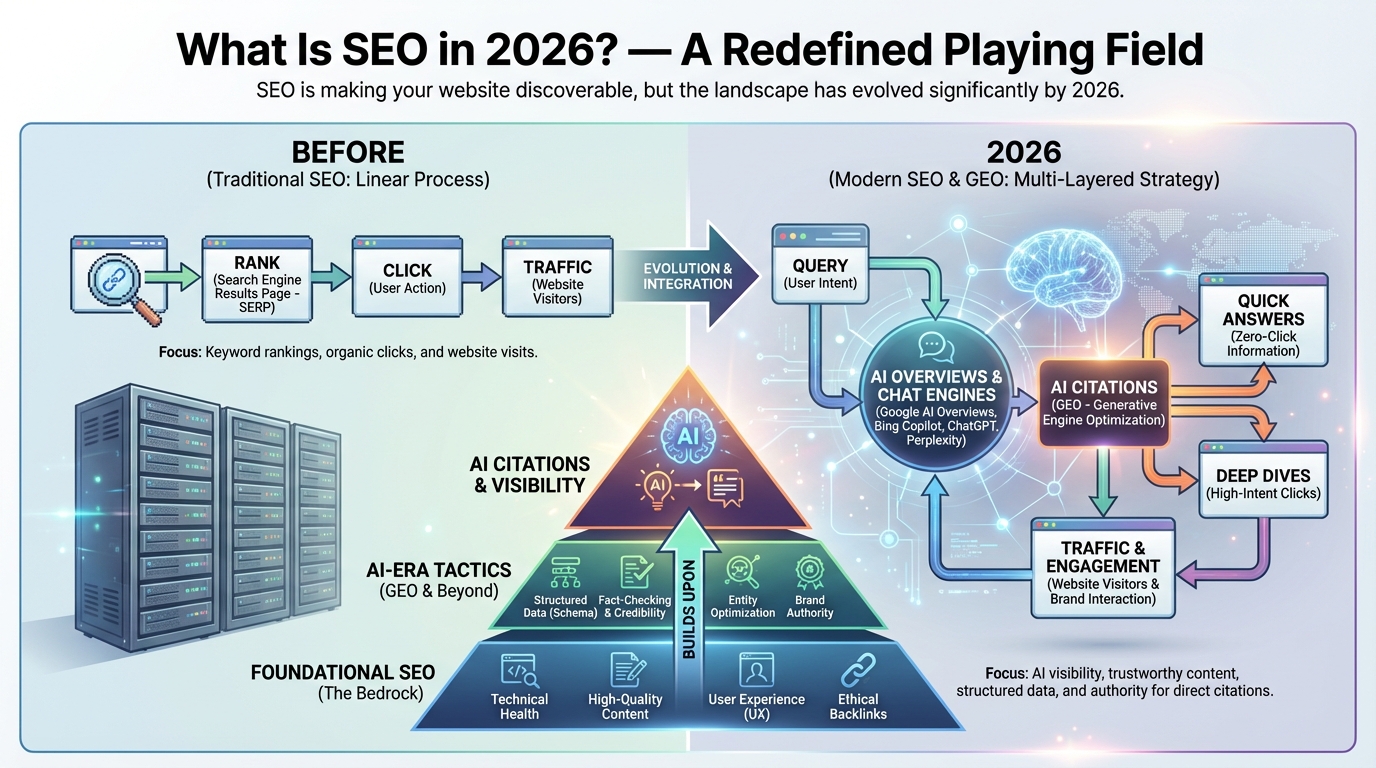
SEO (Search Engine Optimization) is the practice of making your website discoverable in search engines like Google and Bing. Simple enough. But in 2026, the definition has expanded significantly.
Here's the thing: search results no longer look the way they did even two years ago. Google AI Overviews now appear at the top of many queries, synthesizing information from multiple sources into a single AI-generated summary. Meanwhile, standalone AI search engines — ChatGPT, Perplexity, Claude — have carved out their own user bases.
The Old Rules vs. The New Reality
- Before: Rank high → get clicks → drive traffic
- 2026: Rank high + get cited by AI → build brand visibility + drive traffic
This shift has given rise to GEO (Generative Engine Optimization) — optimizing content not just for search rankings but for AI citation. The good news for beginners? Traditional SEO fundamentals remain the entry ticket. Without them, your site won't even be considered by AI systems.
The right approach: master the basics, then layer AI-era tactics on top.
References: Google AI Overviews - Google Search Central SEO Starter Guide - Google for Developers
2. The Rise of AI Search — New Rules for Visibility
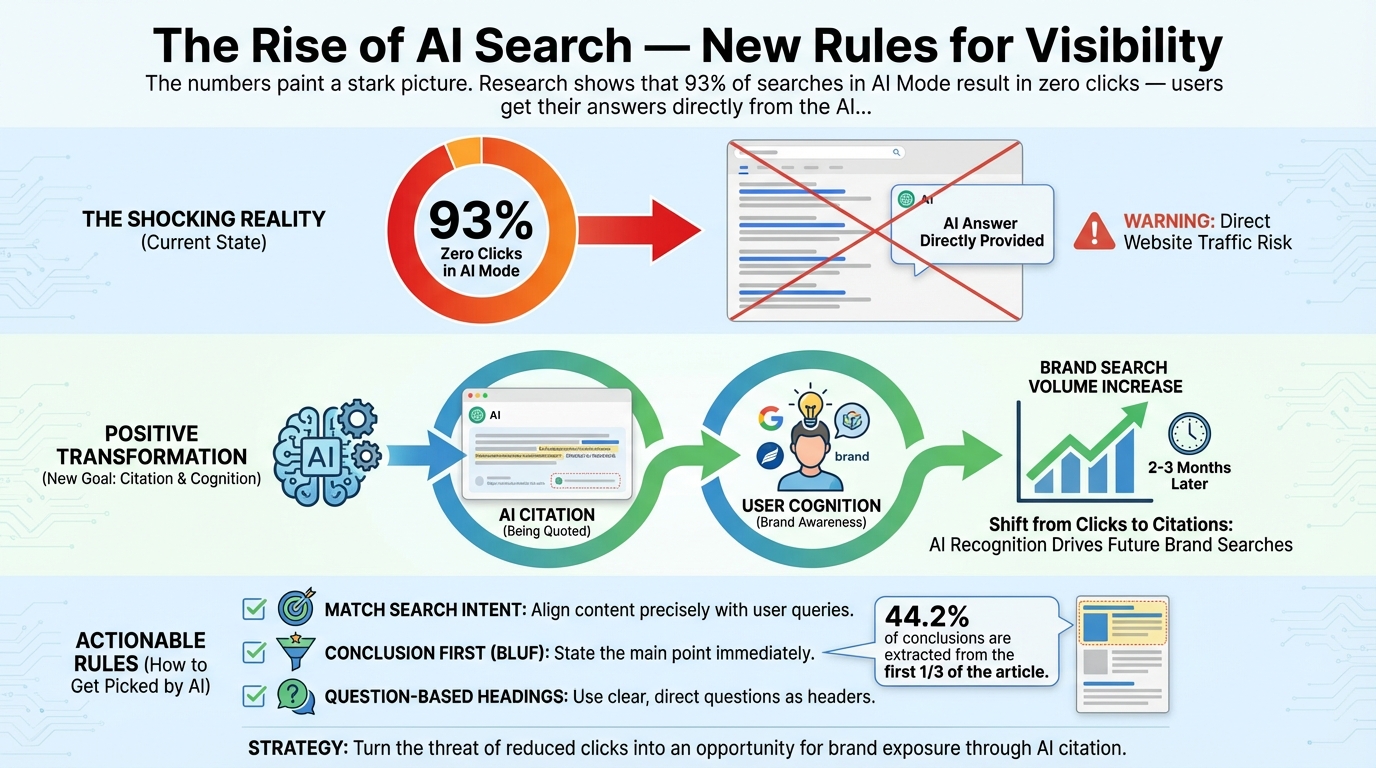
The numbers paint a stark picture. Research shows that 93% of searches in AI Mode result in zero clicks — users get their answers directly from the AI summary without visiting any website.
That sounds alarming. But flip the perspective: if your site is cited in an AI-generated answer, that's brand exposure to every user who reads it. In my analysis, sites that earn AI citations see measurable lifts in brand search volume within 2–3 months.
What Beginners Should Focus On
- Match search intent precisely: Answer what users actually want to know, not what you want to tell them
- Lead with the conclusion: AI extracts information from the first third of articles 44.2% of the time
- Use question-based headings: Headings like "What is...?" or "How do you...?" make it easy for AI to extract answers
For a deep dive into how AI search is reshaping SEO strategy, see "How AI Search Is Changing SEO: 7 Practical Strategies."
References: AI Mode Search Study - Authoritas Google AI Mode Help - Google Support
3. Technical SEO Basics — Building a Solid Foundation
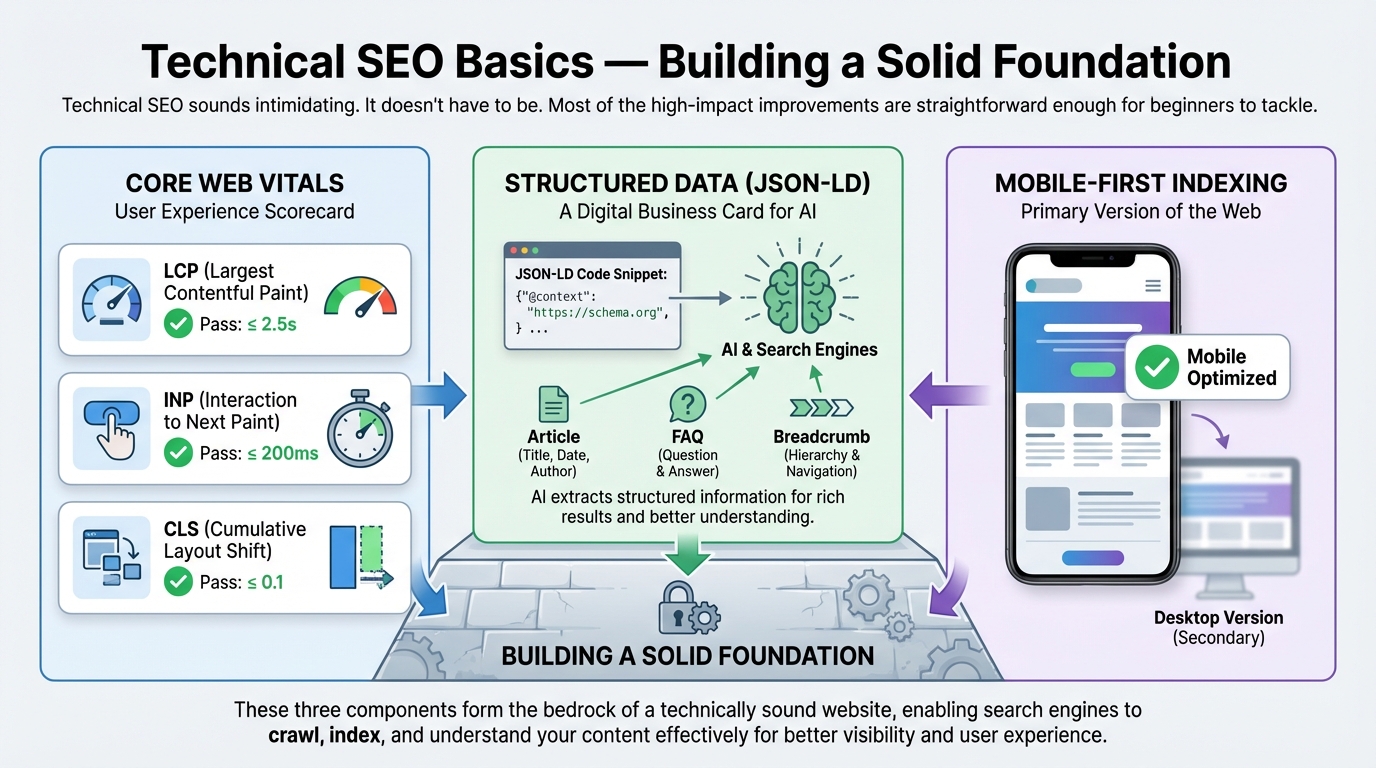
Technical SEO sounds intimidating. It doesn't have to be. Most of the high-impact improvements are straightforward enough for beginners to tackle.
Core Web Vitals — Your Page Experience Report Card
Google uses Core Web Vitals to measure how users experience your pages. Here are the 2026 benchmarks:
| Metric | What It Measures | Passing Score |
|---|---|---|
| LCP (Largest Contentful Paint) | Main content load speed | Under 2.5 seconds |
| INP (Interaction to Next Paint) | Response to user actions | Under 200ms |
| CLS (Cumulative Layout Shift) | Visual stability | Under 0.1 |
INP replaced FID (First Input Delay) in March 2024. It measures responsiveness across all user interactions — clicks, taps, and keystrokes — rather than just the first one.
Structured Data — Your Business Card for AI
Structured data (in JSON-LD format) tells Google and AI systems what your content is about in a machine-readable way. When you add FAQ structured data, AI can directly extract question-answer pairs for citation.
Three types beginners should implement first:
- Article: Communicates author, publish date, and update date
- FAQ: Provides Q&A pairs that AI can cite directly
- BreadcrumbList: Helps AI understand your site hierarchy
Mobile-First Is Essential
Google indexes your mobile pages first. If your site doesn't work well on phones, it won't rank well anywhere. Responsive design is the baseline.
For a comprehensive technical SEO strategy, see the "Complete SEO Guide 2026."
References: Core Web Vitals Overview - web.dev Structured Data - Google Search Central INP Metric - web.dev
4. Content SEO — Writing for Humans and AI
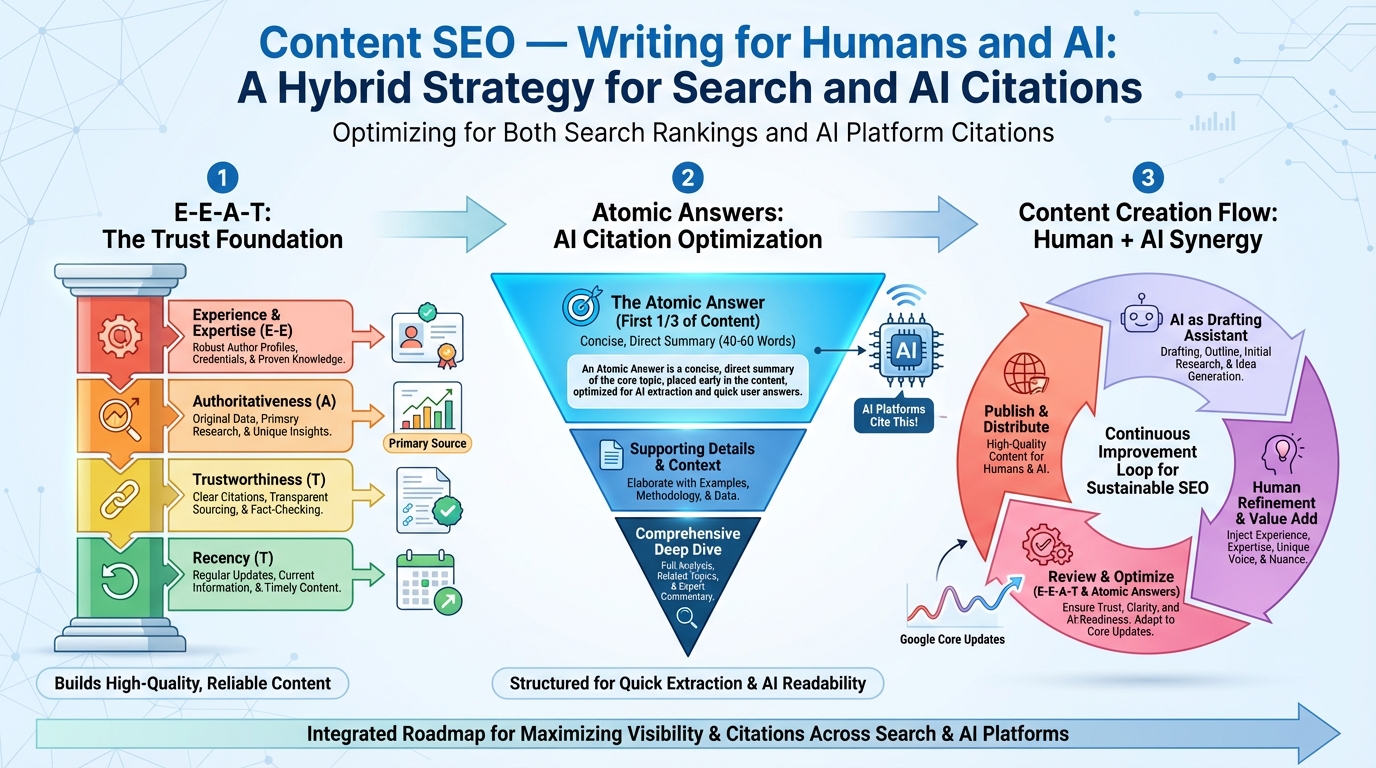
In my testing across multiple AI platforms, content that earns citations follows clear patterns. Let me walk you through the key ones.
E-E-A-T — The Trust Framework
E-E-A-T stands for Experience, Expertise, Authoritativeness, and Trustworthiness. Google's December 2025 update significantly strengthened these signals, and the February 2026 core update added improved detection for low-quality AI content.
Here's what beginners can do right now:
- Create author profiles: Include photo, credentials, and areas of expertise
- Provide first-party data: Share your own research, case studies, and observations
- Cite your sources: Link to the data and studies you reference
- Keep content fresh: Review and update at least every six months
Atomic Answers — The Format AI Loves
What struck me in the research: 44.2% of AI citations come from the first third of articles. Simply putting your conclusion first dramatically increases citation probability.
Atomic Answers are self-contained responses of 40–60 words that directly answer a question.
Example:
Core Web Vitals measure user experience through three metrics: loading speed (LCP), interactivity (INP), and visual stability (CLS). Google's 2026 passing scores are LCP under 2.5 seconds, INP under 200 milliseconds, and CLS under 0.1. These metrics directly influence both search rankings and AI citation eligibility.
This format gives AI a complete, citable answer without needing to paraphrase or extract from longer text.
The AI Content Question
Google doesn't penalize AI-generated content per se. What it targets is low-quality mass-produced content — regardless of whether a human or AI wrote it. The February 2026 core update specifically improved detection of content that lacks originality, expertise, and user value.
The smart approach: use AI as a drafting assistant, then add your experience and expertise to create something genuinely useful.
References: Creating Helpful Content - Google Search Central February 2026 Discover update - Google Search Status Dashboard
LinkSurge
linksurge.jp
SEO・AIO・GEO統合分析プラットフォーム。AI Overviews分析、SEO順位計測、GEO引用最適化など、生成AI時代のブランド露出を最大化するための分析ツールを提供しています。
5. Query Fan-Out — The New SEO Frontier
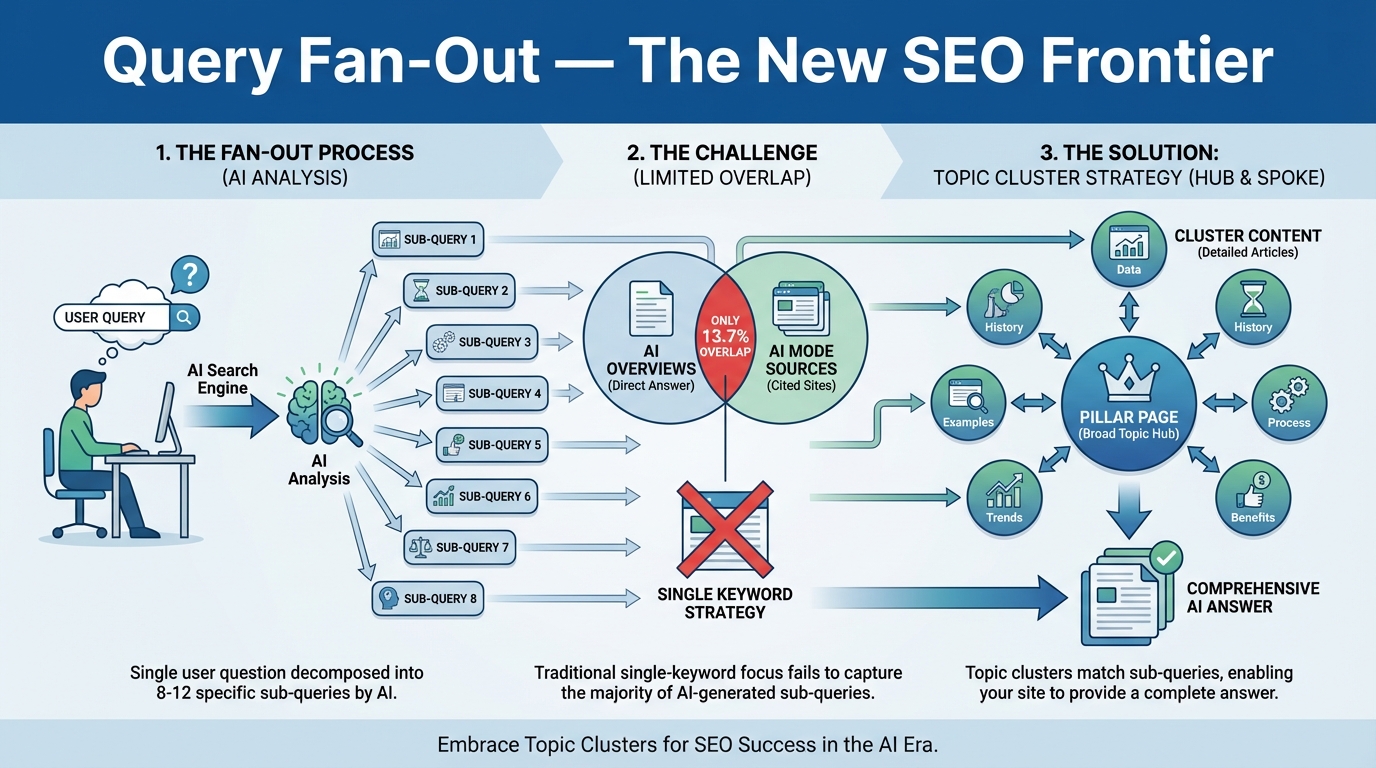
Now that we've covered the fundamentals, let's look at the concept that's reshaping how AI search works: query fan-out.
What Is Query Fan-Out?
When you type a question into Google AI Mode, the AI doesn't just search for your exact query. It breaks your question into 8–12 smaller sub-queries and searches them all in parallel. That's query fan-out.
For example, "What's the best SEO strategy for beginners?" might internally become:
- "SEO basics 2026"
- "beginner SEO checklist"
- "Core Web Vitals improvement guide"
- "E-E-A-T best practices"
- "structured data implementation tutorial"
- "free SEO tools comparison"
The AI then synthesizes results from all these searches into one comprehensive answer.
Why This Changes Everything
Here's the data point that surprised me most: there's only a 13.7% overlap between sites cited in AI Overviews and sites cited in AI Mode. Being ranked #1 for a keyword doesn't guarantee AI citation.
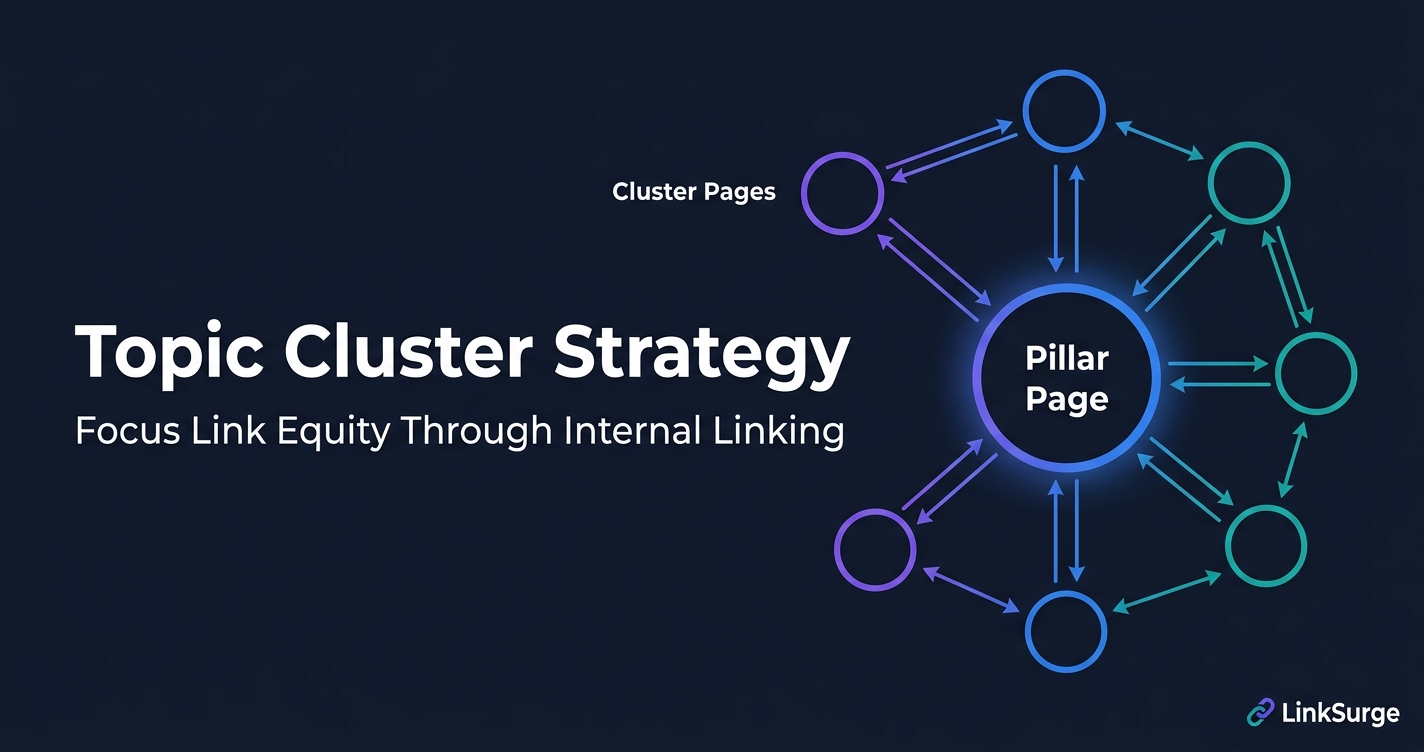
To win in a fan-out world, you need topic clusters — a central pillar page connected to detailed articles on each subtopic, all linked together. This way, when AI searches for multiple sub-queries, your site has answers ready for several of them. Our Topic Clusters & Internal Linking Strategy guide walks through the 5-step design process, link equity concentration techniques, and page pruning criteria.
Practical Steps for Beginners
- Choose a core topic: e.g., "SEO strategy"
- Map related questions: "What is...?", "How do you...?", "Best tools for...?"
- Write a dedicated article for each question: Use Atomic Answers throughout
- Link from your pillar page to each article: Create a hub-and-spoke structure
- Link back from each article to the pillar: Bidirectional linking strengthens the cluster
For a technical deep dive into how query fan-out works inside Google's infrastructure, check out "What Is Query Fan-Out? A Beginner's Guide."
References: Query Fan-Out Architecture - Google DeepMind Research AI Search Citation Analysis - SparkToro
6. Your Beginner Roadmap — Start With These 3 Steps
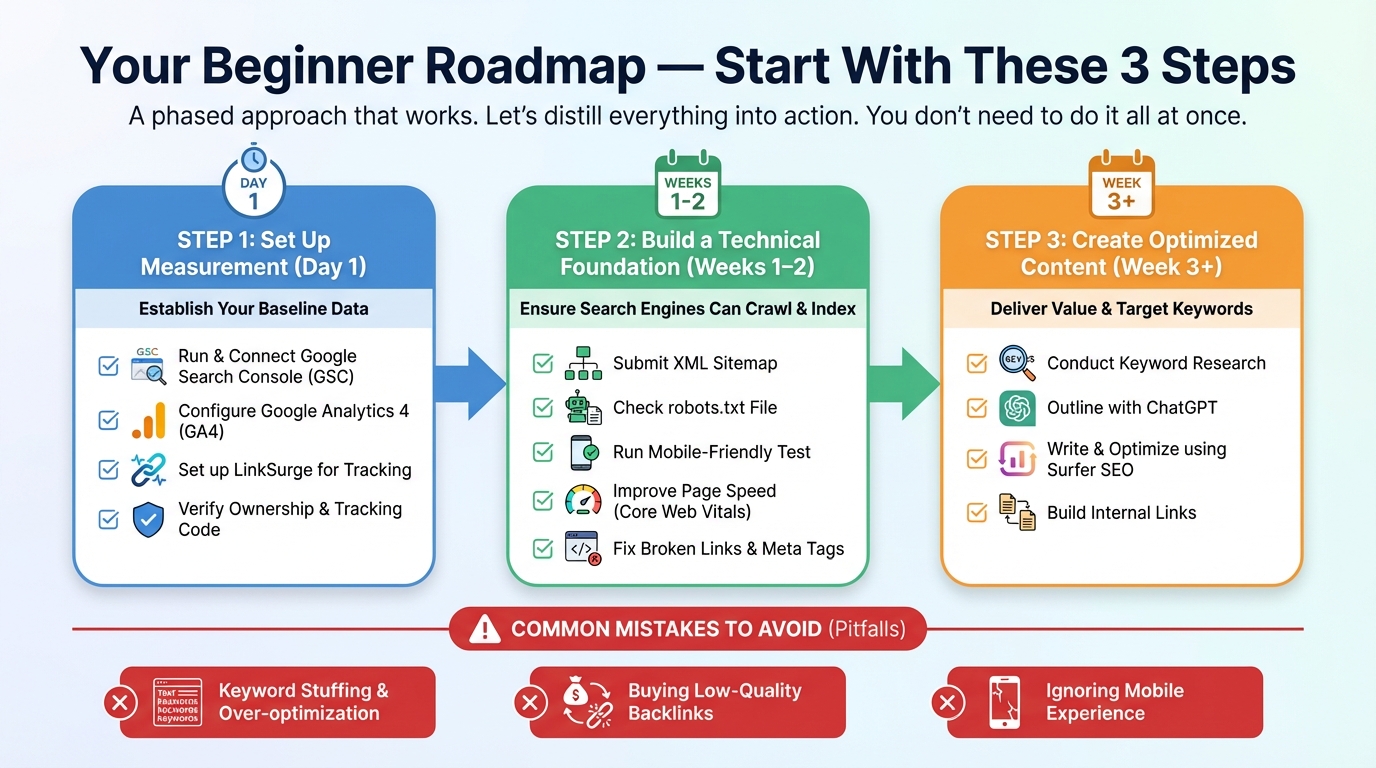
Let's distill everything into action. You don't need to do it all at once. Here's a phased approach that works.
Step 1: Set Up Measurement (Day 1)
Running SEO without analytics is like driving blindfolded. Set up these two free tools first:
- Google Search Console: See which queries bring users to your site and monitor indexing
- Google Analytics 4 (GA4): Track visitor behavior and engagement
Both are free. Google's official documentation walks you through setup step by step.
Step 2: Fix Technical Foundations (Weeks 1–2)
- Check Core Web Vitals with PageSpeed Insights
- Optimize images (use WebP format, proper sizing)
- Verify and fix mobile display
- Create and submit a sitemap (sitemap.xml)
Step 3: Improve and Create Content (Week 3+)
- Audit existing page titles and meta descriptions
- Add question-based headings
- Restructure key content in Atomic Answers format
- Implement FAQ structured data
- Start building topic clusters around your core themes
Tools like LinkSurge can show you how your site appears in AI Overviews and track AI citation performance by keyword. Start with free tools, then add specialized analysis when you're ready to go deeper.
Common Mistakes to Avoid
- Keyword stuffing: Repeating keywords unnaturally hurts more than it helps
- Buying backlinks: Violates Google guidelines and risks penalties
- AI content factories: Mass-producing generic AI articles is a 2026 core update target
- Set-and-forget: Outdated content erodes E-E-A-T trust signals over time
References: Google Search Console Help PageSpeed Insights - Google Developers
7. 2026 SEO Trends Worth Watching
Let me round out with the trends that will define the rest of 2026.
GEO Is Going Mainstream
GEO (Generative Engine Optimization) is no longer experimental. It's the practice of optimizing content to be cited by AI search engines — ChatGPT, Perplexity, Google AI Overviews, and others. While traditional SEO tracks rankings, GEO tracks citation rate and share of voice in AI-generated answers.
LinkSurge offers GEO monitoring that tracks your brand's citation status across major AI search platforms in real time. It's a practical starting point for understanding your AI visibility.
Multimodal Content Matters More
Text-only content is leaving value on the table. AI systems increasingly reference images, videos, and diagrams — but only when they have proper alt text and metadata. Always add descriptive alt attributes to your images.
Local SEO Meets AI Search
For local businesses, AI search queries like "best [service] near me" now pull heavily from Google Business Profile data. Keeping your business profile accurate and up-to-date is more important than ever.
References: GEO: Generative Engine Optimization - Agrawala et al. Google Business Profile Help
Frequently Asked Questions
Can beginners learn SEO on their own?
Yes. The fundamentals of SEO are well-documented and accessible. Google Search Console, PageSpeed Insights, and Google's official SEO Starter Guide provide everything you need to get started at zero cost. Expect to see measurable results within 3–6 months of consistent effort. The key is systematic improvement rather than sporadic changes.
How do I optimize for query fan-out?
Build topic clusters: create one comprehensive pillar page for your main topic, then write 5–10 supporting articles covering specific subtopics. Link them together bidirectionally. Use question-based headings and Atomic Answers format in each article so AI can easily extract partial answers from multiple pages in your cluster.
Does AI-generated content hurt SEO?
Not inherently. Google targets low-quality content regardless of how it was created. The February 2026 core update improved detection of mass-produced AI content that lacks originality and expertise. Using AI as a drafting tool and adding your own experience, data, and insights is perfectly acceptable — and increasingly common among professional content creators.
How long does SEO take to show results?
Technical improvements (page speed, mobile fixes) can show ranking changes within weeks. Content-based improvements typically take 3–6 months to fully materialize. Domain authority builds over years. Set up monthly Search Console reviews to track progress and adjust your strategy based on actual data rather than assumptions.
What's the most cost-effective SEO starting point?
In order of impact: (1) set up Google Search Console and GA4, (2) optimize title tags and meta descriptions for your highest-traffic pages, (3) fix Core Web Vitals issues (image compression, removing unused scripts), (4) add FAQ structured data, (5) restructure content with question headings and Atomic Answers. All achievable with free tools within the first month.
Conclusion: Start With Three Actions Today
SEO in 2026 has new layers — AI citations, query fan-out, GEO — but the core principle hasn't changed: create genuinely useful content on a technically sound website, and search engines (and AI) will find you.
If you do three things today:
- Register your site with Google Search Console
- Rewrite the heading of your most-visited page as a question
- Add one FAQ section with structured data markup
That's your first step into AI-era SEO. Everything else builds on this foundation.
LinkSurge's AI Overview analysis lets you see exactly how your site is cited in AI search results, keyword by keyword. Once your SEO basics are in place, it's the natural next step for understanding your AI visibility.