LinkSurge Blog
Latest insights on SEO, GEO, AIO, and digital marketing
How Many Searches Hide Behind One Question? Seeing Query Fan-Out for Your Own Keywords — A Beginner's Guide
AI search splits one question into several searches to gather information, a technique called query fan-out. Based on Google's own description, this beginner's guide covers how it works, five types of sub-queries, and how to see the real sub-queries for your keywords and turn them into headings, using LinkSurge's query fan-out analysis.
What Pages Cited in Google AI Overviews Have in Common — A Beginner's Guide to Restructuring Your Article
What do pages cited in Google AI Overviews have in common? Drawing on Google's official guide, an expert survey and our own citation data, this beginner's guide covers three shared traits, how to compare your article with the pages that get cited, and how to do it with LinkSurge's AIO optimization analysis.
Is Your Site Showing Up in Google AI Overviews? A Beginner's Guide to Finding the Keywords Where You're Cited
A beginner's guide to checking which keywords your site is cited for in Google AI Overviews. What Search Console's generative AI report does and doesn't show, three ways to check, and how to read a keyword visibility report, step by step.
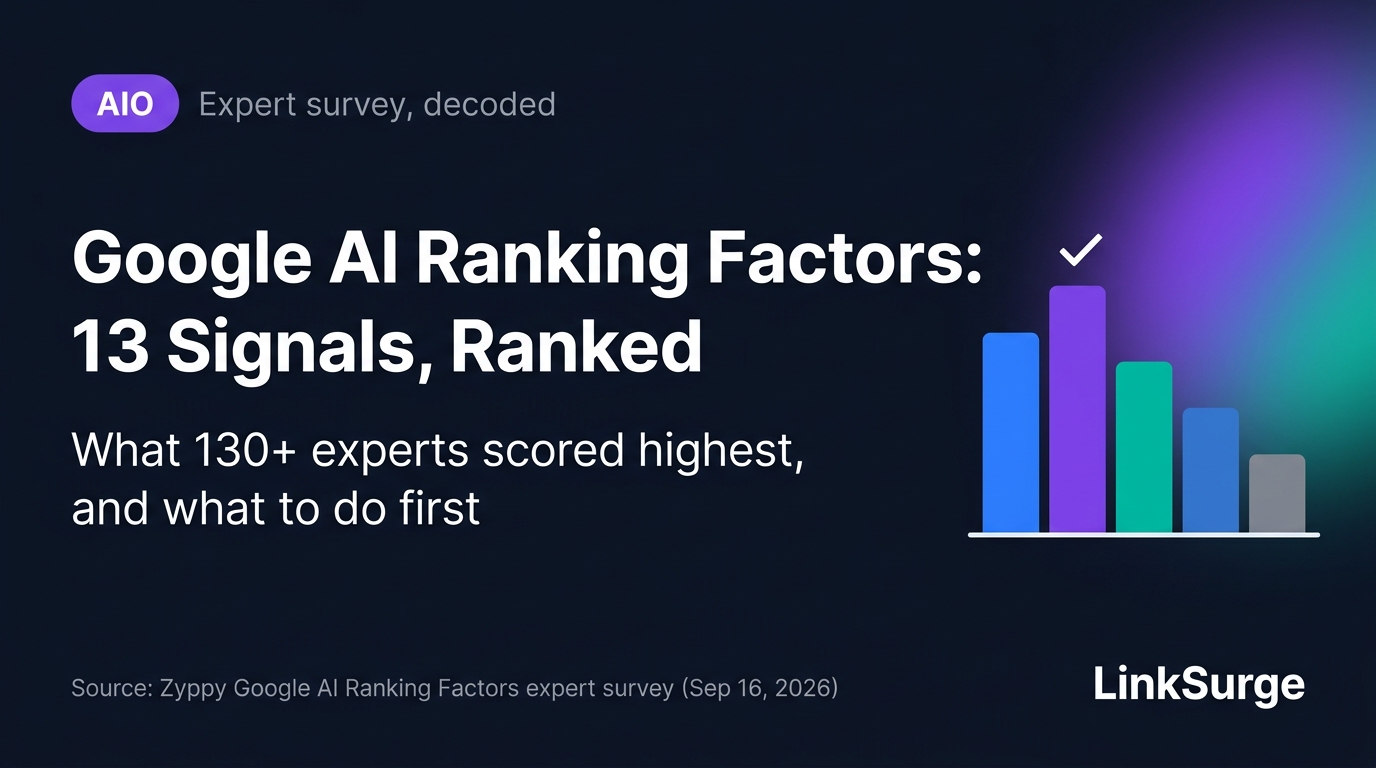
Google AI Ranking Factors: What 130+ Experts Scored Highest, and the Order to Work In
Zyppy's September 2026 survey of 130+ search experts ranks 13 Google AI ranking factors. Crawl access (+2.20), query-answer match (+2.15) and brand memory in the LLM (+2.08) lead; structured data scores +0.80 and llms.txt +0.05. Here is what each factor means and the order to work in.
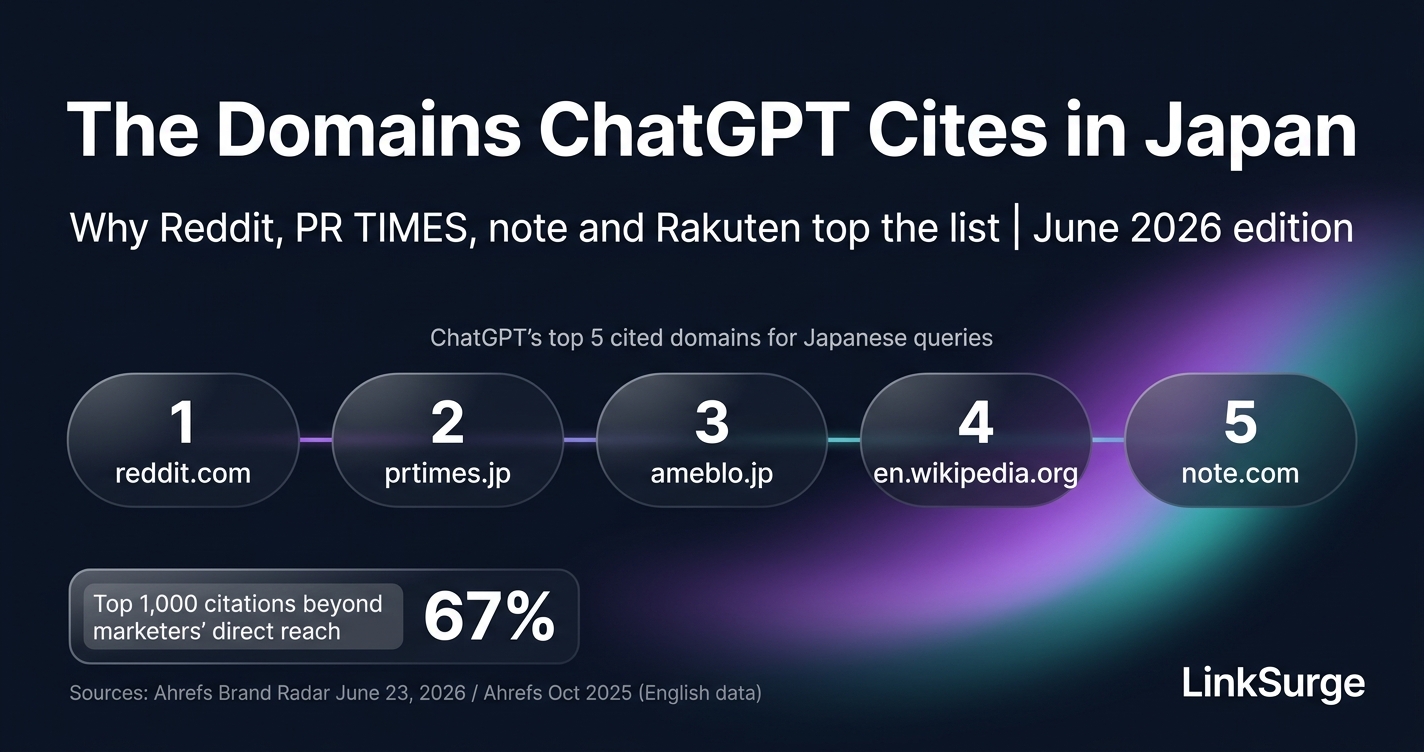
The Domains ChatGPT Cites in Japan: Why Reddit, PR TIMES, note and Rakuten Top the List, and How to Map Citation Sources for Your Own Market
Using Ahrefs' Japan data (May–Sept 2025, April 2026, June 2026) and its industry breakdown (automotive, IT, food), this article maps the domains ChatGPT cites for Japanese queries, explains why English Wikipedia outranks Japanese Wikipedia, shows that in Ahrefs' English-language data only 32.3% of ChatGPT's top 1,000 citations are within marketers' direct reach and the remaining roughly 67% are not, and gives a method for mapping citation sources in any market.
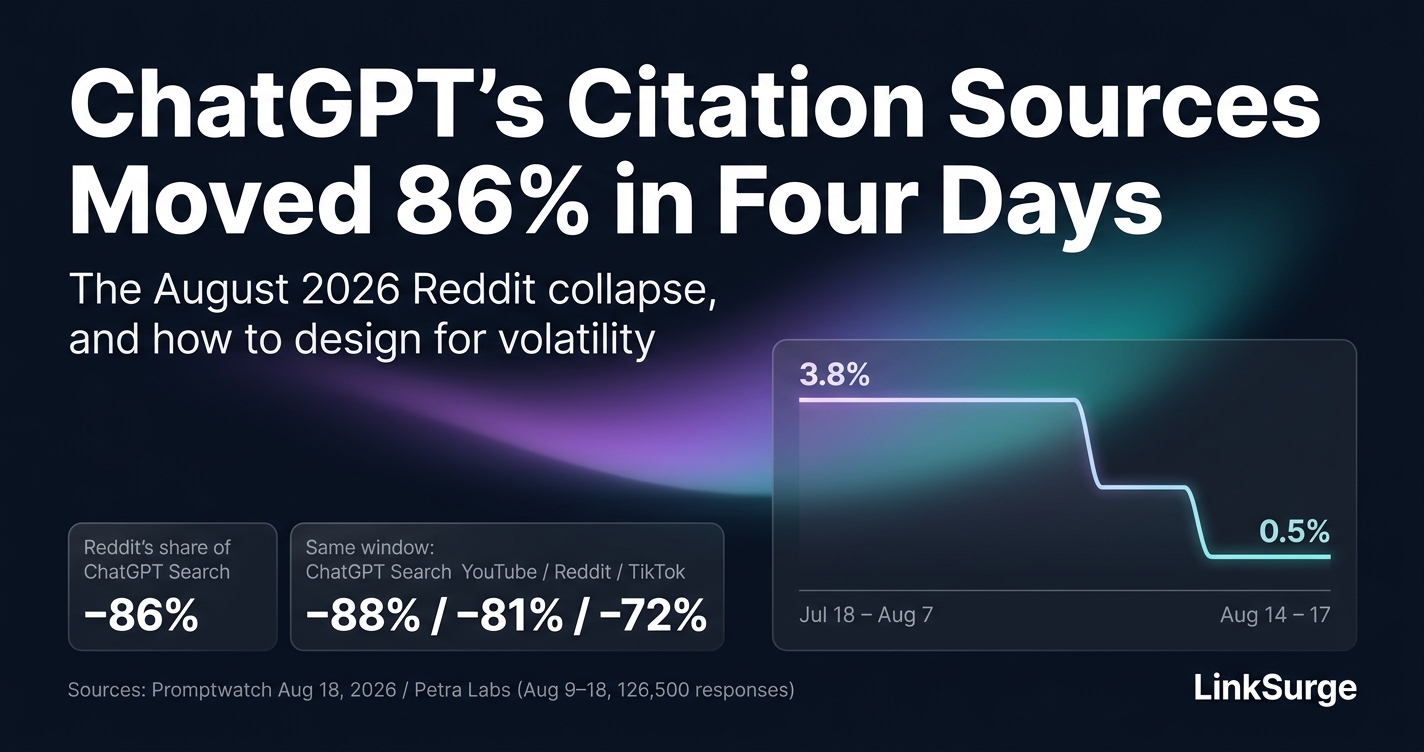
ChatGPT's Citation Sources Moved 86% in Four Days: What the August 2026 Reddit Collapse Revealed, and How to Design for Volatility
In August 2026, Reddit's share of ChatGPT Search citations fell from 3.8% to 0.5% in four days, and YouTube and TikTok citations dropped 70 to 90 percent. Using Promptwatch and Petra Labs data, this article traces what happened, where the citations went, and how to build a source-diversified, continuously measured strategy that survives the next shift.
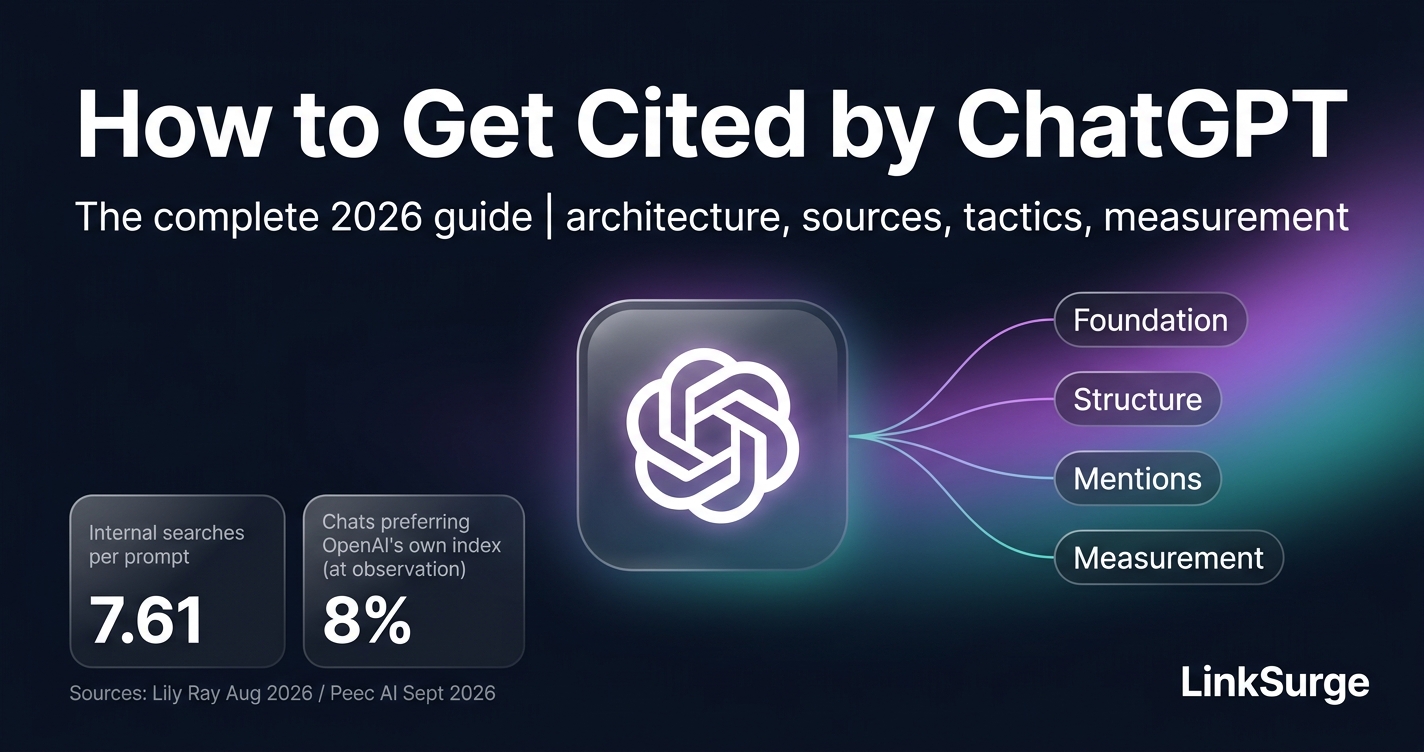
How to Get Cited by ChatGPT: The Complete 2026 Guide to Search Architecture, Citation Sources, Tactics and Measurement
ChatGPT search runs on three index layers (Bing, Google and OpenAI's own index) and splits one question into 7+ hidden sub-queries. Built on OpenAI's official docs and 2026 data from Ahrefs, Peec AI, Profound and Lily Ray, this pillar guide covers how ChatGPT retrieves and cites, what to fix first, and how to measure it.
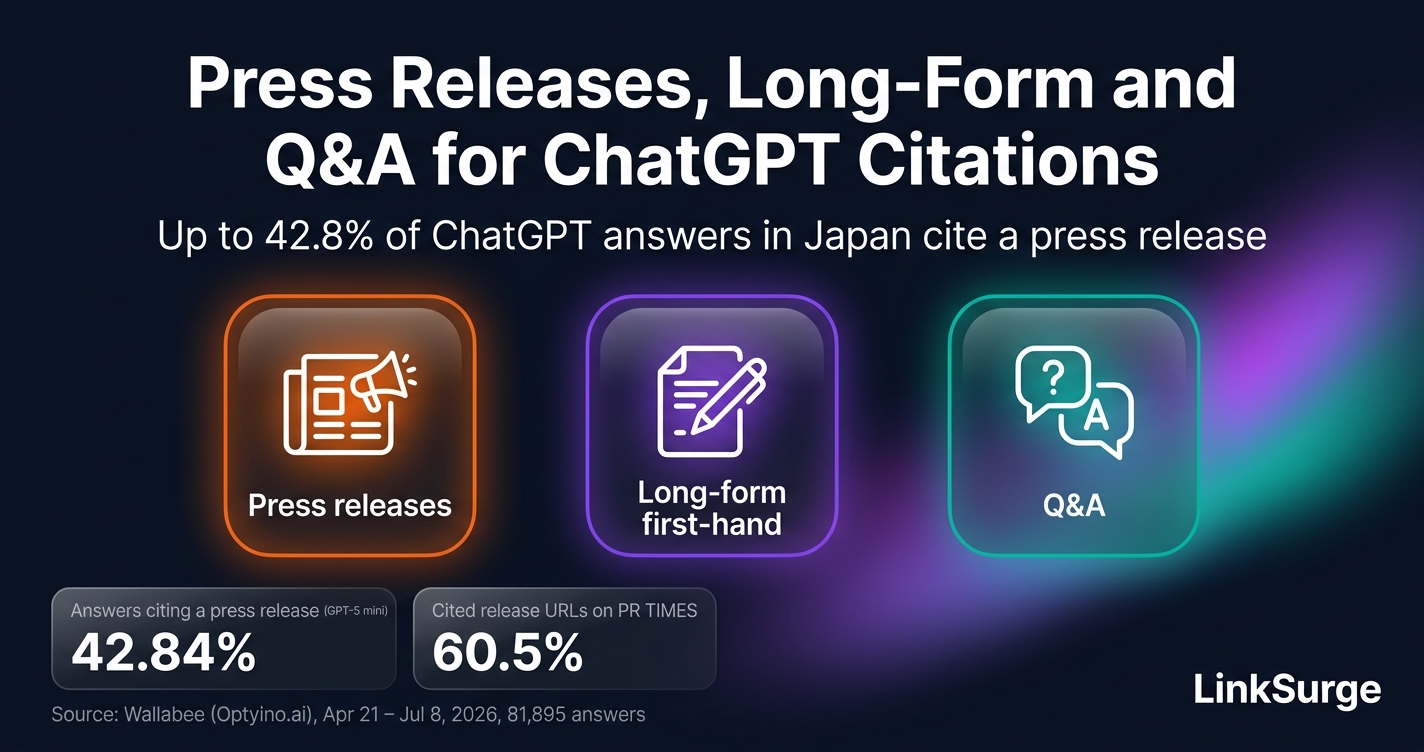
Using Press Releases, note and Q&A Sites for ChatGPT Citations: Why Up to 42.8% of ChatGPT Answers Cite a Press Release in Japan, and What Gets a Release Cited
Wallabee's analysis of 81,895 AI answers found up to 42.84% of ChatGPT responses cite a press release, 60.5% of them on PR TIMES. Sighted's 1,056-run test identified the elements that get a release cited (five for research reports, four for product launches) and the query wording that decides between the press release and the official site. A Japan case study with lessons for any market.
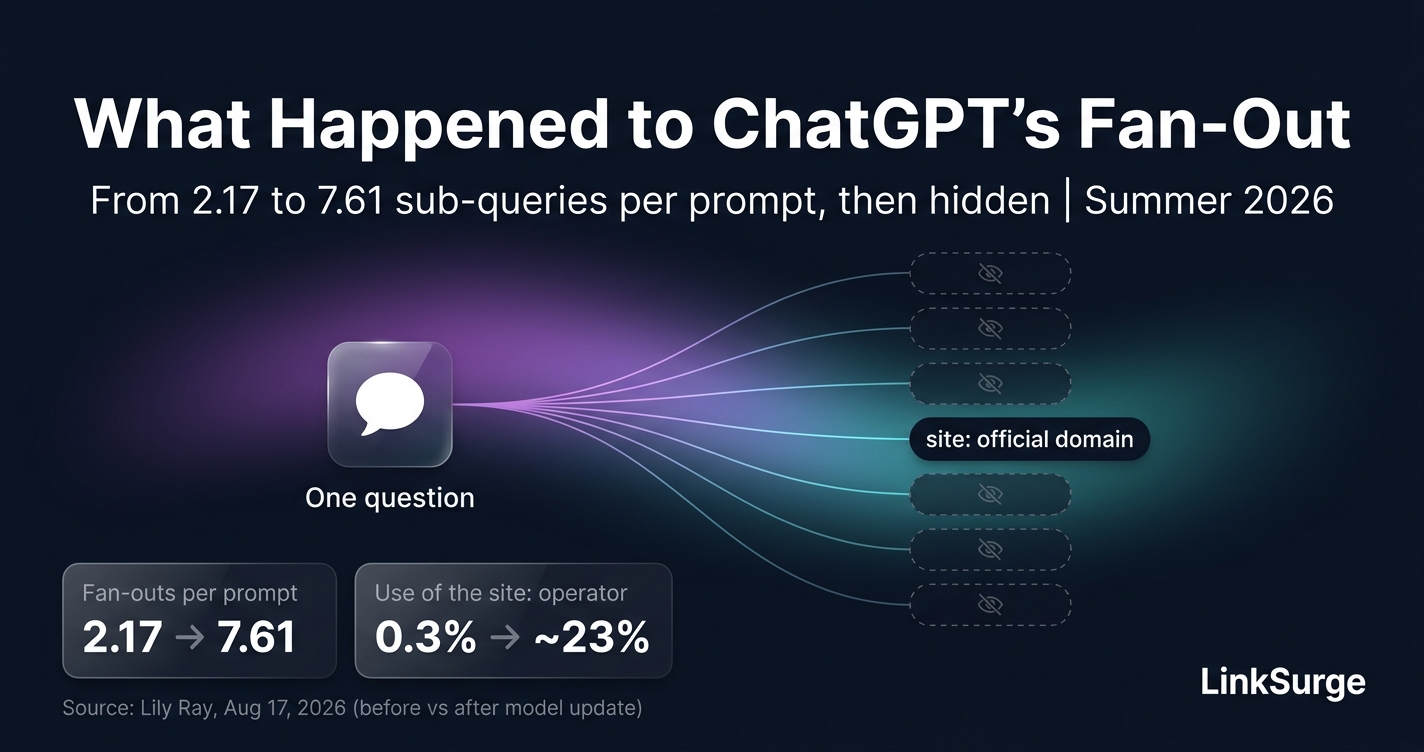
What Happened to ChatGPT's Query Fan-Out: From 2.17 to 7.61 Sub-Queries per Prompt, and Then Hidden
ChatGPT now splits one question into 7+ internal searches on average, but during the GPT-5.3 to 5.4 period in mid-2026 those sub-queries stopped appearing in the conversation interface. Using observations from Lily Ray, MJ Cachón and Ahrefs, this article covers how many fan-outs run, what they look like, how to retrieve them via the Responses API, and how to optimize when you can't see them.