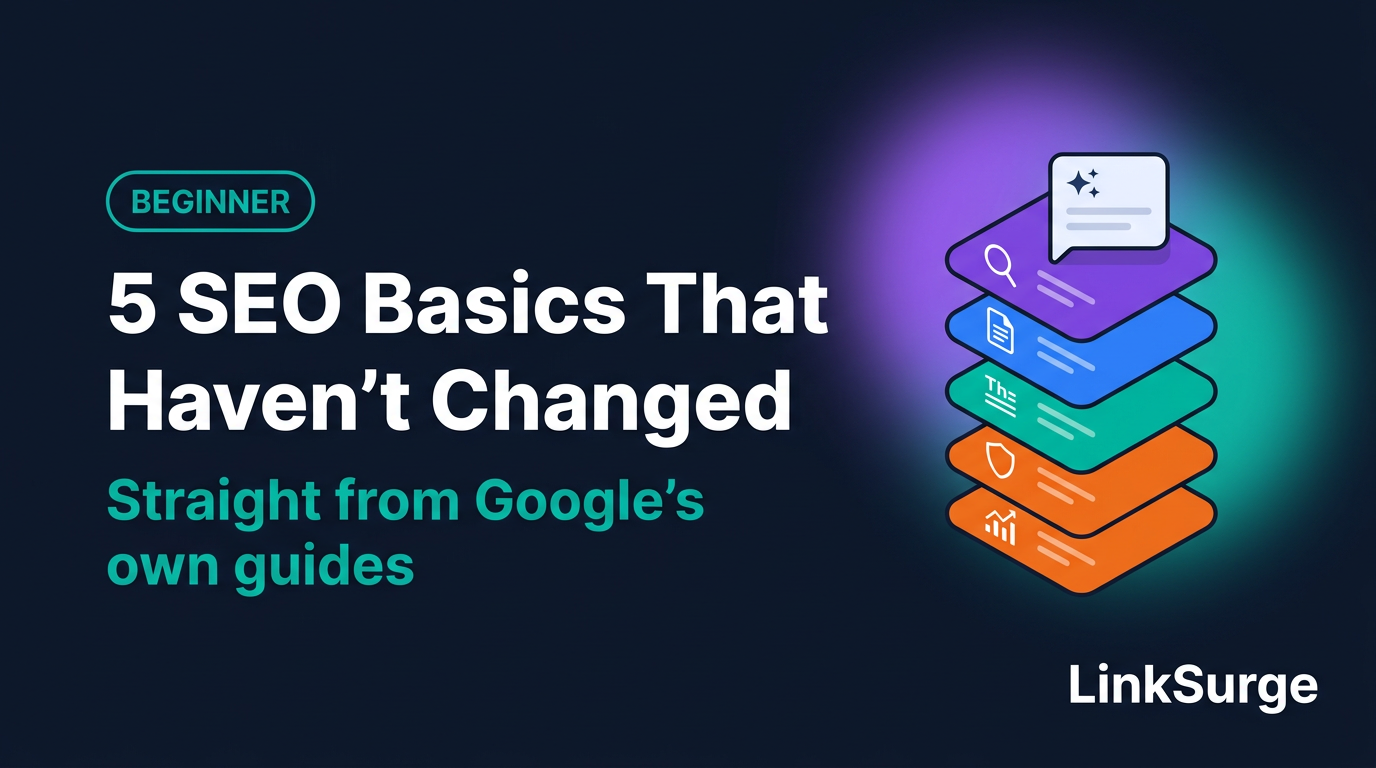
5 SEO Basics That Haven't Changed in the AI Era, Straight From Google's Own Guides
目次
Key Takeaways: AI-Era SEO Is Built on Five Basics
"If AI answers everything now, do I still need SEO?" I asked myself this more than once while writing this beginner series. Rereading Google's official guides, the answer is clear. Here are the five basics that haven't changed.
- Get found and indexed — To appear as a link in AI Overviews or AI Mode, a page must be indexed and eligible to show a snippet in Google Search. The crawling and indexing fundamentals still apply in full
- Write original content for people — Google says creating compelling, useful content will likely influence your search presence more than anything else in its SEO guide. Its AI-features guidance puts even more weight on a unique perspective
- Speak your readers' language, clearly — Anticipate the words people search with, and make titles and headings describe the page accurately. Well-organized writing works for humans and machines alike
- Earn trust through authorship and accuracy — Of the E-E-A-T qualities, Google says trust matters most. Topics touching health or money face an even higher bar
- Measure, and skip the shortcuts — Changes can take weeks to show. AI feature traffic is already in your Search Console data. Google says no special AI files or markup are needed
First, let's confirm why Google says the basics still apply. Then we'll walk through each one, looking back at the first batch of this beginner series as we go.
1. Why the Basics Still Hold
Let's start with the evidence. Everything in this section is about Google Search.
Google says no special optimization is needed for AI features
Google's guide "AI features and your website" says SEO best practices remain relevant for AI features like AI Overviews and AI Mode. There are no additional requirements to appear in them, and no special optimizations are necessary.
AI Overviews are the AI-written summaries that appear at the top of some search results. AI Mode is a conversational search experience for exploring complex questions. Both are covered in this series: "What Are AI Overviews?" and "What Is Google AI Mode?"
AI answers are built on top of Search
Google's guide "Optimizing your website for generative AI features on Google Search" goes further. It says these features are rooted in Google's core ranking and quality systems, so SEO best practices continue to apply.
When the AI builds an answer, it retrieves relevant pages from the search index and uses them to ground the response. This technique is called retrieval-augmented generation (RAG), or grounding. In other words, the raw material for AI answers is still pages found through search.
The same guide addresses the terms AEO (answer engine optimization) and GEO (generative engine optimization). From Google Search's perspective, it says, optimizing for generative AI search is optimizing for the search experience. It's still SEO.
Honestly, I was surprised Google stated it that plainly. However many names we invent (SEO, GEO, AIO, LLMO), the foundation is the same where Google is concerned. That matches what we covered in "SEO vs. GEO vs. AIO vs. LLMO."
AI outside Google works differently
One caveat. All of this is about Google Search. ChatGPT and other non-Google AI tools gather information in their own ways, so Google's guidance doesn't automatically apply. For a beginner-friendly look at ChatGPT, see "Where Does ChatGPT Get Its Information?"
References: AI features and your website - Google Search Central Optimizing your website for generative AI features on Google Search - Google Search Central
2. Basic 1: Get Found and Indexed
With the evidence in place, here's the first basic. Search engines work in three stages: crawling (finding and fetching pages), indexing (understanding and storing them), and serving results (choosing pages for each query).
AI feature eligibility follows the same path
Google's "AI features and your website" guide lists what a page needs to be shown as a supporting link in AI Overviews or AI Mode:
- It must be indexed
- It must be eligible to be shown in Google Search with a snippet
- It must meet Search's technical requirements
Google adds that there are no additional technical requirements. On top of these page-level requirements, your site must not be excluded through Search Console's Search generative AI control (sites are included by default). Put simply, a page that can't appear in regular search can't appear in AI answers either.
The same guide lists basics that still matter: make sure crawling is allowed in robots.txt and by your CDN or hosting setup, make content easy to find through internal links, and put important content in text form.
Looking back at the first batch
We covered this in the first part of the series:
- How the three stages work → "How Search Engines Work"
- What to check when a page won't show up → "Why Isn't My Page on Google?"
- Moving pages without losing them → "What Is a 301 Redirect?"
In my experience, when someone asks "why isn't AI citing us?", it sometimes turns out the page was never indexed in regular search. Check this before anything AI-specific.
References: AI features and your website - Google Search Central Google Search Essentials - Google Search Central
3. Basic 2: Write Original Content for People
The second basic is substance. Google's SEO Starter Guide says creating compelling and useful content will likely influence your website more than any of the other factors it discusses. It describes useful content like this:
| Starter Guide trait | In plain terms |
|---|---|
| Easy to read and well organized | No typos, broken into paragraphs and sections with headings |
| Unique | Written from your own knowledge, not copied or rehashed |
| Up to date | Old content is reviewed, updated or removed |
| Helpful, reliable and people-first | Readers find it useful and trustworthy |
What matters even more with AI in the mix
Google's generative AI optimization guide says the same thing more forcefully. AI systems look at many sources, so a distinctive perspective helps. Firsthand experience offers a unique angle, while summarizing existing content just repeats what's available elsewhere.
The guide also warns that commodity content, like yet another "7 tips for first-time homebuyers," is hard to stand out with. When AI can summarize general advice in seconds, your own experience, data and judgment are what make a page worth citing.
If you use AI to help write, see "Does Google Penalize AI-Written Content?" in this series.
References: SEO Starter Guide - Google Search Central Optimizing your website for generative AI features on Google Search - Google Search Central
4. Basic 3: Speak Your Readers' Language, Clearly
The third basic is presentation. Great content doesn't help if readers can't find it or can't tell what it's about.
Think about the words people actually use
The Starter Guide suggests anticipating the words people use to search. Someone who knows a topic well might search differently from a newcomer. Google's example: one person searches "charcuterie," another searches "cheese board."
It also says you don't need to anticipate every variation, because Google's language matching understands relationships between words. The generative AI guide likewise says you don't need to rewrite content specifically for AI.
Make titles and headings describe the page
Google Search Essentials lists placing the words people search with in prominent spots, such as the title and main heading, as a key best practice. The title and description shown in search results are what people use to decide whether to click.
From the first batch:
- Earning the click in search results → "Title Tags and Meta Descriptions"
- When a term trips you up → "SEO Glossary for Beginners"
The generative AI guide also says you don't need to "chunk" content into tiny pieces for AI. Organizing with headings and paragraphs is for human readers. It just happens to make the page easier for machines to understand too.
References: SEO Starter Guide - Google Search Central Google Search Essentials - Google Search Central Optimizing your website for generative AI features on Google Search - Google Search Central
5. Basic 4: Earn Trust Through Authorship and Accuracy
The fourth basic is trust. Google's page "Creating helpful, reliable, people-first content" says that of the E-E-A-T qualities, trust is the most important.
E-E-A-T is a direction, not a score
Here's a common mix-up. In the Starter Guide's list of things Google doesn't consider important, "thinking E-E-A-T is a ranking factor" is right there. E-E-A-T isn't a direct ranking factor. It's a way of describing what great content looks like.
That doesn't make it optional. Make it clear who wrote the content and keep the facts accurate. For topics that can affect people's health or finances (YMYL), Google says its systems give even more weight to content with strong E-E-A-T.
Looking back at the first batch
- Showing who wrote the content → "What Is E-E-A-T?"
- The higher bar for health and money topics → "What Is YMYL?"
- Links as signals from other sites → "What Are Backlinks?"
The AI era adds one more angle: how your brand is talked about elsewhere. We cover it in "Why Branded Search and Brand Mentions Matter in the AI Era." But the foundation is still publishing trustworthy information, consistently.
References: Creating helpful, reliable, people-first content - Google Search Central SEO Starter Guide - Google Search Central
6. Basic 5: Measure, and Skip the Shortcuts
The fifth basic is how you check results, and how you handle "shortcuts."
Changes take time
The Starter Guide says some changes take effect in a few hours while others take several months. In general, Google suggests waiting a few weeks before judging whether a change helped. And not every change produces a visible effect.
AI feature traffic is already in Search Console
According to "AI features and your website," sites that appear in AI Overviews and AI Mode are included in Search Console's Performance report, under the "Web" search type. Search Console is Google's free tool for site owners. Before hunting for a separate AI metric, learn to read the numbers you already have.
From the first batch:
- Where to start → "Your First Hour in Google Search Console"
- Avoiding misreadings → "Rankings, Impressions, and Clicks Are Not the Same Thing"
- When rankings move → "Why Do Search Rankings Change Every Day?"
For a closer look at AI feature data, see "How to Read Search Console's Generative AI Performance Report." Alongside Search Console, tools like LinkSurge can record keyword rankings and AI Overview citations over time, which makes it easier to explain why things changed.
Google doesn't need "AI hacks"
Google's generative AI guide says none of the following are needed to appear in Google's AI features:
- llms.txt or other special AI files or markup
- "Chunking" content into small pieces for AI
- Rewriting content specifically for AI
- Special schema.org structured data for AI
Structured data itself is still recommended as part of your overall SEO, since it helps pages qualify for rich results (enhanced listings like review stars).
On llms.txt, separate the use cases. Google says Search ignores it, so creating one will neither help nor harm your visibility or rankings in Google Search. It also says it's completely fine to maintain one for other services that use it. In fact, some companies publish llms.txt for their documentation so AI agents (AI that reads sites and completes tasks on someone's behalf) can use it. That's an agent use case, not a search-citation tactic.
The claim that FAQ schema gets you cited by AI hasn't held up either. We removed that kind of number from our own product, and the story is in "Does FAQ Schema Really Get You Cited 3.2x More?"
References: SEO Starter Guide - Google Search Central AI features and your website - Google Search Central Optimizing your website for generative AI features on Google Search - Google Search Central
7. So What Did Change?
The basics hold. But how search results look, and how information reaches people, really has changed. The second batch of this series covers those changes one by one.
| What changed | Article in this series |
|---|---|
| AI answers appear at the top of results | What Are AI Overviews? |
| Some searches end without a click | What Is Zero-Click Search? |
| Some pages get cited by AI, others don't | Why Some Pages Get Cited by AI and Others Don't |
| AI can write articles | Does Google Penalize AI-Written Content? |
| People research with non-Google AI | Where Does ChatGPT Get Its Information? |
| Search can be a conversation | What Is Google AI Mode? |
| How your brand is talked about matters more | Branded Search and Brand Mentions, Explained |
Having written the whole batch, here's my takeaway: what changed is how answers are displayed and how many doors lead to them. The job of creating the pages those answers are built from, the five basics in this article, is still here.
To see whether your site is cited in AI Overviews, LinkSurge's AI Overview analysis shows what each AI Overview contains and which sources it cites, keyword by keyword.
8. Common Misconceptions and Mistakes
Myth 1: "AI answers everything now, so SEO is dead"
Google says SEO still works for generative AI search, because AI answers are built from pages retrieved from its index. SEO isn't dead. It now pays off in more places.
Myth 2: "GEO and AIO replace SEO, so we can stop doing SEO"
For Google Search, Google describes optimizing for generative AI as SEO. Drop the basics and you lose the very things AI features require, like being indexed.
Myth 3: "Special AI files or markup will get us into AI answers"
For Google Search, Google says you don't need llms.txt-style files or special schema.org markup. Spend your effort on the five basics first.
Myth 4: "What works on Google works the same on ChatGPT"
Google's guidance is about Google Search. ChatGPT and other non-Google AI tools gather information differently, so treat them separately. "Inside ChatGPT Search" is a good next step if you want the details.
9. How to Check Your Own Site
Here's a checklist for testing each basic on your own site.
| Basic | What to check | Where to check |
|---|---|---|
| 1. Get found | Are your important pages indexed? | Search Console URL Inspection |
| 2. Substance | Does each article include something only you could write? | Reread articles one by one |
| 3. Presentation | Do titles and headings describe the page in readers' words? | How pages look in results; which keywords they rank for |
| 4. Trust | Is the author clear, and are the facts verified? | Bylines, sources |
| 5. Measurement | Are you tracking impressions, clicks and rankings under consistent conditions? | Search Console, a rank tracker |
For the third item, LinkSurge's ranked keywords analysis lists the words your pages actually appear for. If they don't match what you intended, that's your cue to revisit titles and headings.
References: URL Inspection Tool - Search Console Help
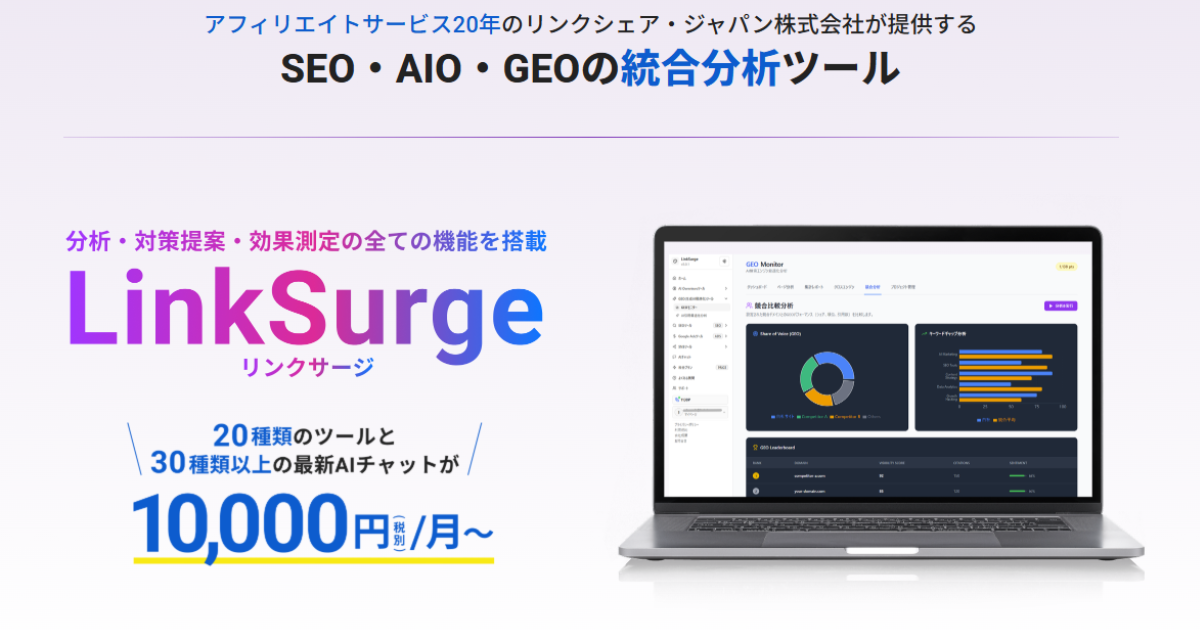
LinkSurge
linksurge.jp
SEO・AIO・GEO統合分析プラットフォーム。AI Overviews分析、SEO順位計測、GEO引用最適化など、生成AI時代のブランド露出を最大化するための分析ツールを提供しています。
Quick Check
Q1: Are there special requirements beyond normal SEO to appear in Google's AI Overviews or AI Mode?
Answer: No. Google says there are no additional requirements or special optimizations, and SEO best practices still apply.
Q2: What technical conditions must a page meet to be shown as a link in AI Overviews or AI Mode?
Answer: It must be indexed, eligible to show a snippet in Google Search, and meet Search's technical requirements.
Q3: Is E-E-A-T itself a ranking factor?
Answer: No. Google lists "thinking E-E-A-T is a ranking factor" among things it doesn't consider important. It describes qualities of great content, with trust as the most important.
Frequently Asked Questions
Do I still need SEO in the AI era?
Yes. Google says its generative AI features, such as AI Overviews and AI Mode, are rooted in its core ranking and quality systems, so SEO best practices still apply. AI answers are built from pages retrieved from the search index.
Do I need special optimization to appear in AI Overviews?
Not for Google Search. Google says there are no additional requirements, and no special AI files or schema.org markup are needed. Meeting the normal search requirements, including being indexed and eligible for a snippet, is the prerequisite.
Should I create an llms.txt file?
Not for appearing or being cited in Google Search; Google says Search doesn't use it. Some companies do publish llms.txt so AI agents can read their documentation. Decide based on whether your goal is search or agent use.
Should GEO and SEO be separate projects?
For Google Search, Google treats optimizing for generative AI as part of SEO. Non-Google AI tools such as ChatGPT work differently, so the practical approach is to build on SEO fundamentals and then check each platform's mechanics separately.
Conclusion: Audit the Five Basics Before Chasing New Buzzwords
AI Overviews, AI Mode, GEO, AIO: new terms keep coming. For Google Search, though, everything still rests on the same five basics. Get found, write original content, present it clearly, earn trust, and measure.
Start with item 1 on the checklist: confirm your most important pages are indexed. With the foundation in place, the next change won't send you scrambling.
This article wraps up the second batch of the series. The previous article was "Why Branded Search and Brand Mentions Matter in the AI Era." For the full reading order, see the "SEO, GEO and AIO Beginner Curriculum." To see how SEO got here over 30 years, "How SEO Changed" is a good next read.
LinkSurge's ranked keywords analysis shows every keyword your domain currently appears for in search results.